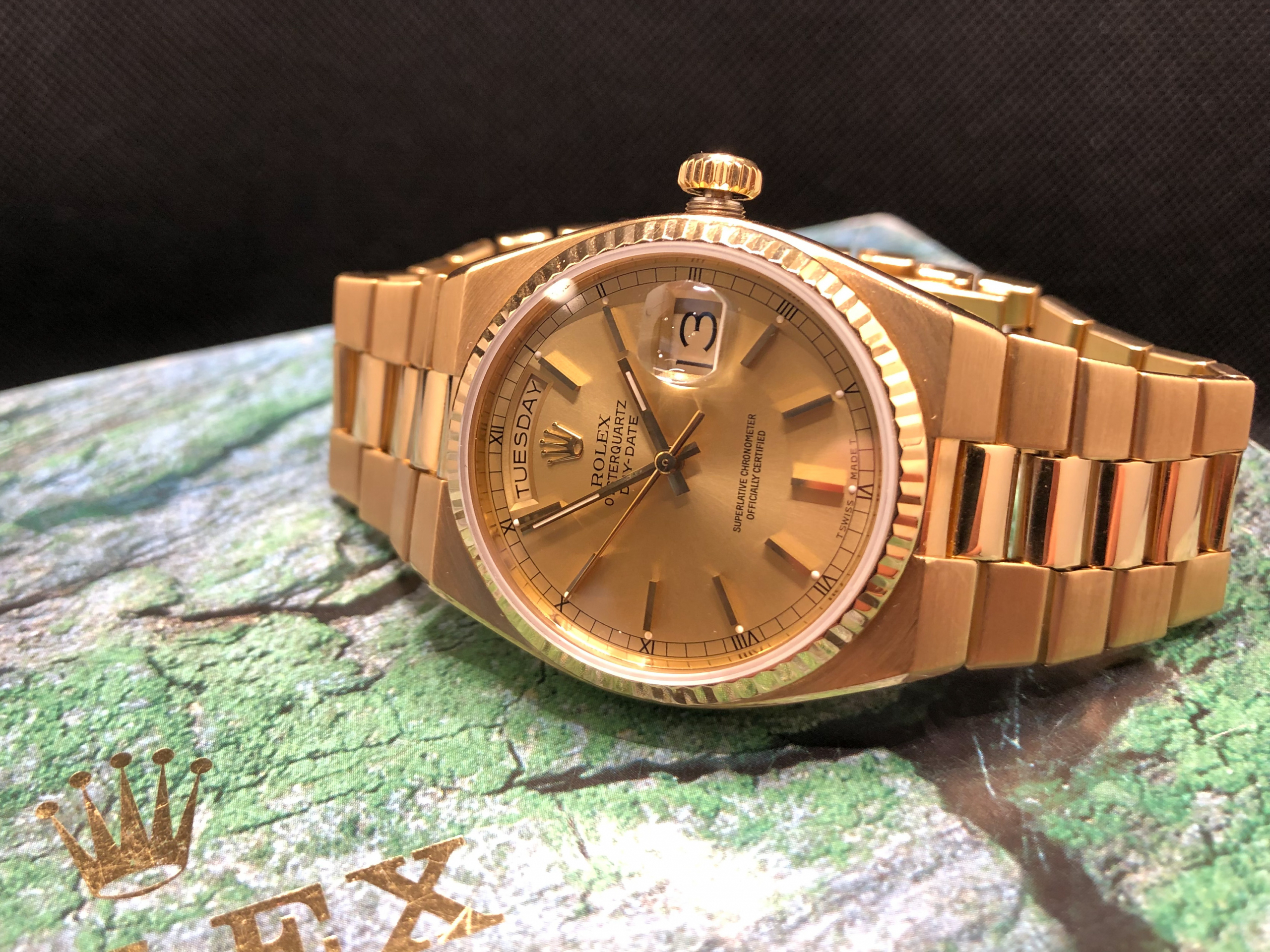
Introduced in the late 1970s, the Rolex Oysterquartz represents a significant yet often overlooked chapter in Rolex’s history. This collection emerged during the quartz revolution, when the Swiss watch industry began incorporating quartz movements as an answer to the proliferation of inexpensive, highly accurate Japanese watches. The Oysterquartz models are unique in Rolex’s lineup, combining the traditional Rolex aesthetic with the distinctive angularity of 1970s design and quartz movement. Let’s delve into the intriguing Rolex Oysterquartz with these ten detailed facts:
- Quartz Movement: As its name suggests, the Oysterquartz is powered by a quartz movement, a significant departure from Rolex’s traditional focus on mechanical movements. The Rolex Calibres 5035 (Datejust model) and 5055 (Day-Date model) are thermocompensated and among the most advanced quartz movements ever made.
- Limited Production: Rolex produced the Oysterquartz for approximately 25 years, from the late 1970s to the early 2000s. However, the production was relatively limited. It’s estimated that Rolex produced about 25,000 Oysterquartz watches in total.
- Integrated Bracelet: Unlike other Rolex watches that feature lug and bracelet designs, the Oysterquartz models feature an integrated bracelet, a style that was popular in the 1970s. The case and bracelet design are more angular compared to other Rolex models, giving the Oysterquartz a unique aesthetic.
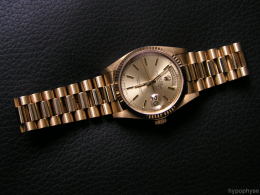
- Datejust and Day-Date Models: The Oysterquartz was available as a Datejust (reference 17000 series) and a Day-Date (reference 19000 series). The Day-Date Oysterquartz models were only made in precious metals and are considered more collectible.
- Superlative Chronometer Certification: Despite being quartz, the Oysterquartz movements were still COSC-certified (Swiss Official Chronometer Testing Institute), maintaining Rolex’s commitment to precision and reliability.
- Second Hand Movement: The Oysterquartz’s second hand “ticks” in one-second intervals, much like other quartz watches, which is a notable difference from the smooth sweeping motion of mechanical Rolex models.
- Materials: The Oysterquartz Datejust was primarily available in stainless steel, while the Day-Date models were available in yellow or white gold. Some models also featured gem-set bezels and dials.
- Size: The Oysterquartz models came in a 36mm case size, similar to traditional Datejust and Day-Date models.
- Dial Variations: Over the course of production, the Oysterquartz was made with a wide variety of dial colors, patterns, and hour marker styles, offering a range of choices for collectors and enthusiasts.
- Discontinuation and Collectability: The Oysterquartz was officially discontinued in the early 2000s. Today, these watches are sought after by collectors for their unique design, the quality of their quartz movements, and their important role in Rolex’s history.