
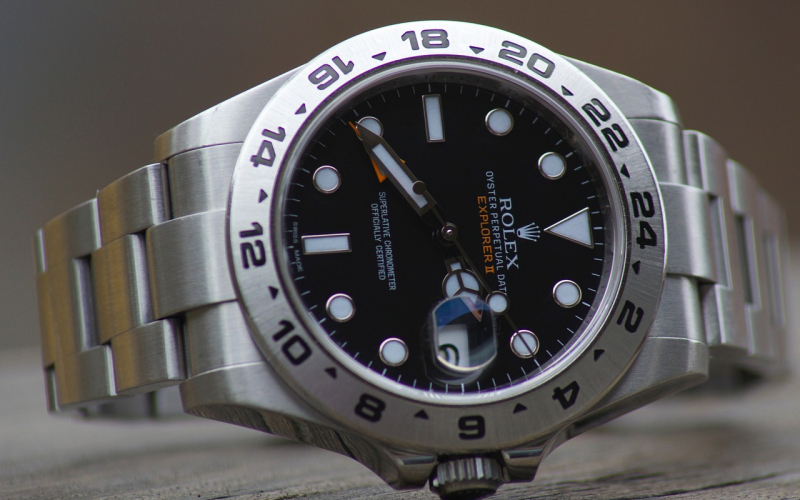
The Rolex Explorer II, first unveiled in 1971, stands as a testament to Rolex’s unceasing commitment to producing durable, functional, and stylish timepieces. Developed as an evolution of the original Rolex Explorer, the Explorer II was designed with cave explorers in mind, featuring unique traits to accommodate their adventurous pursuits.
Equipped with an additional 24-hour hand and a fixed bezel with 24-hour graduations, this timepiece provides an essential tool for distinguishing day from night in dark environments where the sun never rises or sets. Join us as we delve into the distinctive characteristics and intriguing history of the Rolex Explorer II through these ten detailed facts.
- Introduction: The Rolex Explorer II was introduced in 1971, sixteen years after the launch of the original Rolex Explorer. It was designed as a robust and highly refined tool watch for explorers, particularly speleologists or cave explorers.
- 24-Hour Hand: The most distinctive feature of the Explorer II is the additional 24-hour hand. Originally, this hand was intended to help cave explorers distinguish between day and night when they couldn’t see the sun.
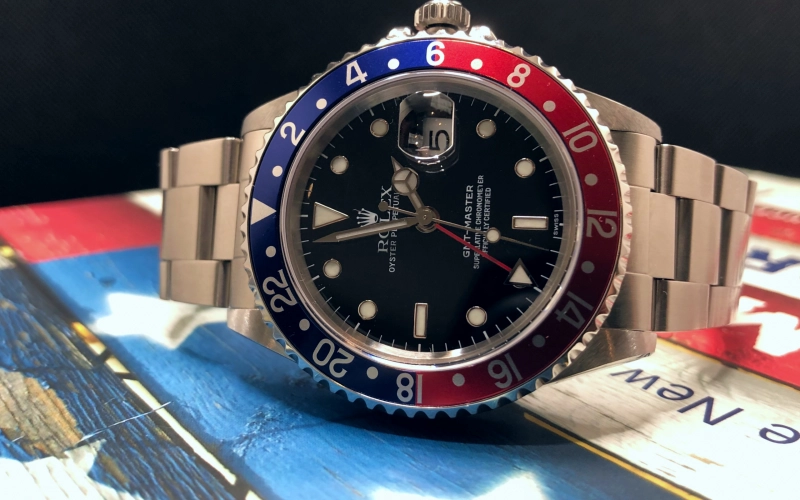
- Fixed Bezel: Unlike its cousin the GMT-Master, which has a rotating bezel, the Explorer II features a fixed 24-hour graduated bezel. This allows the wearer to track another time zone or to use the 24-hour hand for day-night indication.
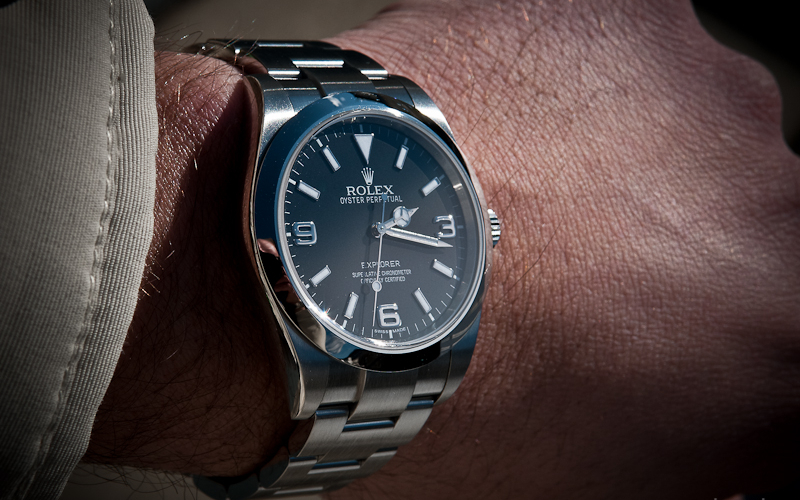
- High Visibility Dial: The Explorer II is renowned for its highly legible dial, with large hour markers and broad hands. The hands and markers are filled with a luminous material for visibility in dark conditions.
- “Steve McQueen” Rolex: The original Rolex Explorer II, model 1655, is often referred to as the “Steve McQueen Rolex,” although there’s no documented evidence that the famous actor ever wore this model. The association appears to have originated from marketing materials.
- Materials: The Explorer II is made from Oystersteel, a particular formulation of 904L stainless steel that is highly resistant to corrosion and maintains its beauty even in the harshest environments.
- Movement: The latest Explorer II models house Rolex’s Calibre 3285, an automatic movement that features a Parachrom hairspring for greater resistance to shocks and temperature variations. This movement boasts approximately 70 hours of power reserve.
- Enhanced Durability: The Explorer II features a Twinlock winding crown, contributing to its water resistance up to 100 meters (330 feet). It also has a sapphire crystal, which is virtually scratch-proof.
- Variations: The Explorer II has seen different variations over the years. The latest model, released in 2021 for its 50th anniversary, retains the 42mm case size introduced in 2011 and features a redesigned case and bracelet for improved comfort and aesthetics.
- Orange 24-Hour Hand: One of the notable features of the Explorer II is its bright orange 24-hour hand. This design cue harkens back to the original Explorer II (Ref. 1655), providing a touch of vintage appeal to the modern iteration of the watch.